

For forest conservation projects, securing protection for carbon-rich ecosystems is only part of the equation. To generate credible carbon credits, a project must also demonstrate that its intervention has made a measurable difference; essentially, proving that the emissions reductions it claims would not have happened if the project wasn’t there to begin with. This comparison between project baseline and project impact is referred to as additionality, and it is a cornerstone of integrity in the voluntary carbon market (VCM).
For the Katingan Mentaya Project, demonstrating additionality means establishing a credible, evidence-based picture of what would most likely have happened to the project area without our intervention. It is a way to both demonstrate the importance of our work and objectively calculate its value. That evidence includes Indonesian government records showing that land within the current project area was actively targeted for industrial plantation development; it also includes regulatory, economic and landscape evidence supporting the project’s baseline scenario.
Additionality is one of the most important, and also one of the most keenly scrutinised, aspects of the VCM. In a market that demands certainty, dealing in hypotheticals can be problematic; nevertheless, scrutiny and criticism are essential to credibility, as they make transparency in methodology just as important as the validity of results. For the Katingan Mentaya Project and other initiatives walking a similar path, the key is to provide robust evidence to support additionality claims throughout the journey, which can then be independently verified and valued accordingly.
In this article, we outline exactly what additionality means to projects producing carbon credits for the VCM, highlight some of the key concerns and controversies surrounding this topic, and assess how the Katingan Mentaya Project’s additionality credentials stand up to scrutiny.
What is additionality in carbon finance?
Additionality is essentially a counterfactual test: would the emissions reductions achieved by a carbon project have occurred anyway, without that project there to claim them? If the answer is yes, those reductions cannot legitimately be attributed to the project. If protecting a forest would have happened regardless, issuing carbon credits for that protection would not represent an additional climate benefit.
For REDD+ projects such as the Katingan Mentaya Project, this makes the baseline (the scenario describing what would most likely have happened without the project) critically important. Additionality is not determined simply by looking at whether deforestation is visible around a project's boundaries today. Instead, projects must establish a credible counterfactual based on the best available evidence of the threats, economic conditions, regulations and land-use patterns that existed prior to project intervention.
For the project, that assessment begins with the status of the project area when PT Rimba Makmur Utama (RMU) applied for its restoration concession in 2007.
A landscape under clear commercial pressure
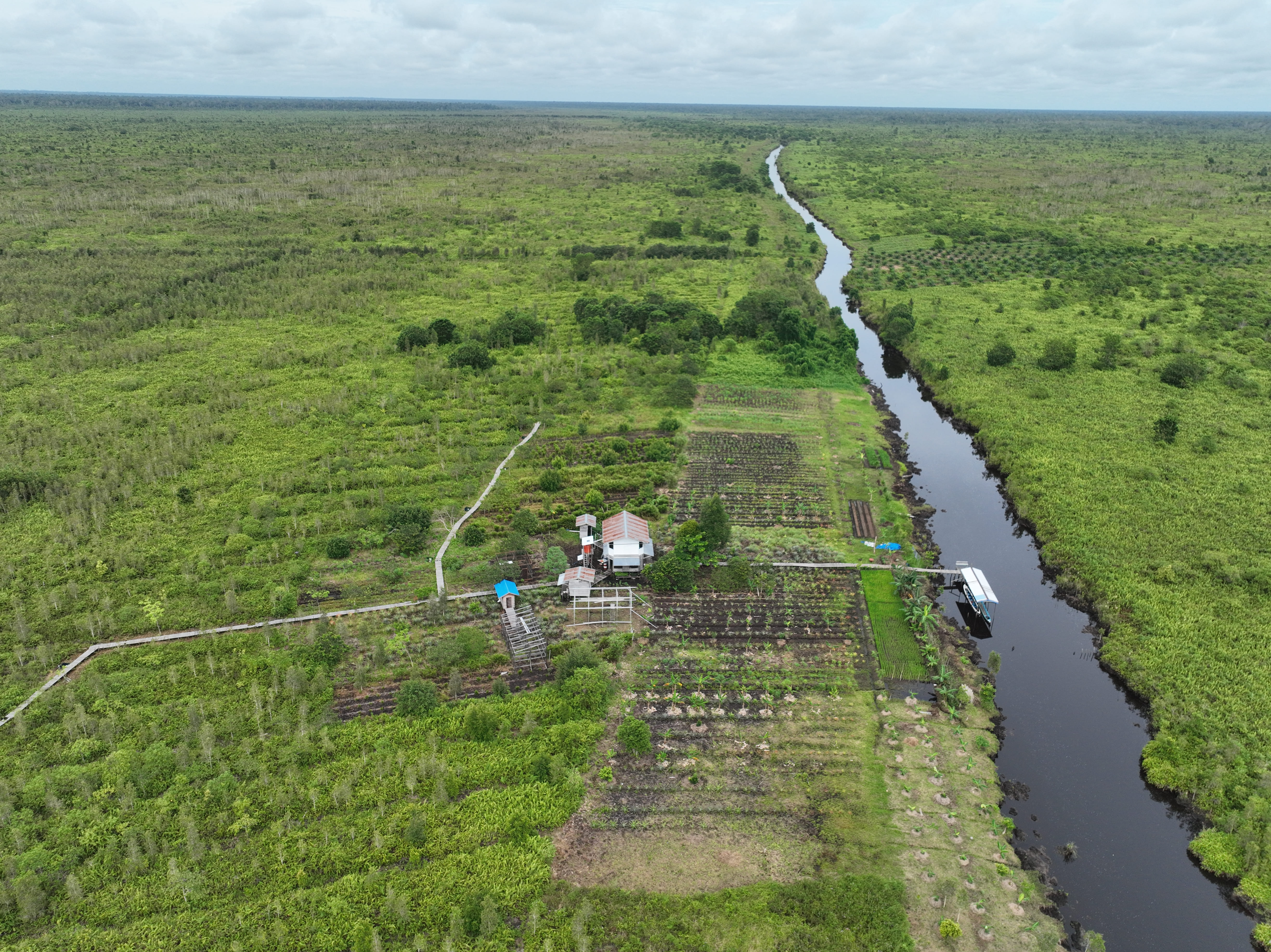
At that time, the area now protected by the project was classified as Permanent Production Forest (Hutan Produksi Tetap, or HP). It also appeared on the Indonesian Ministry of Forestry's publicly available Indicative Map as unencumbered land available for industrial timber plantation permit applications, known as IUPHHK-HTI. The wider policy and economic environment at this time also favoured plantation expansion.
Indonesia's Ministry of Forestry was seeking to expand the country's acacia plantation sector, with a published target of increasing plantation areas nationwide from 10 million hectares in 2010 to 13 million hectares by 2014. Government policy was geared towards accelerating pulpwood development, with plantation businesses incentivised through interest-free loans from the Dana Reboisasi fund, import duty exemptions and simplified permit processing. Responding to this permissive regulatory environment, pulpwood companies all over Kalimantan were actively prospecting for tenure of available production forests, including areas of carbon-rich peatland.
The Katingan Mentaya Project’s counterfactual therefore does not begin with the assumption that an otherwise untouched forest might hypothetically have attracted commercial interest. Rather, the area was already legally designated for production and located within a landscape experiencing active plantation expansion. Crucially, there is also direct evidence that a company attempted to develop part of it.
Documented evidence of plantation interest
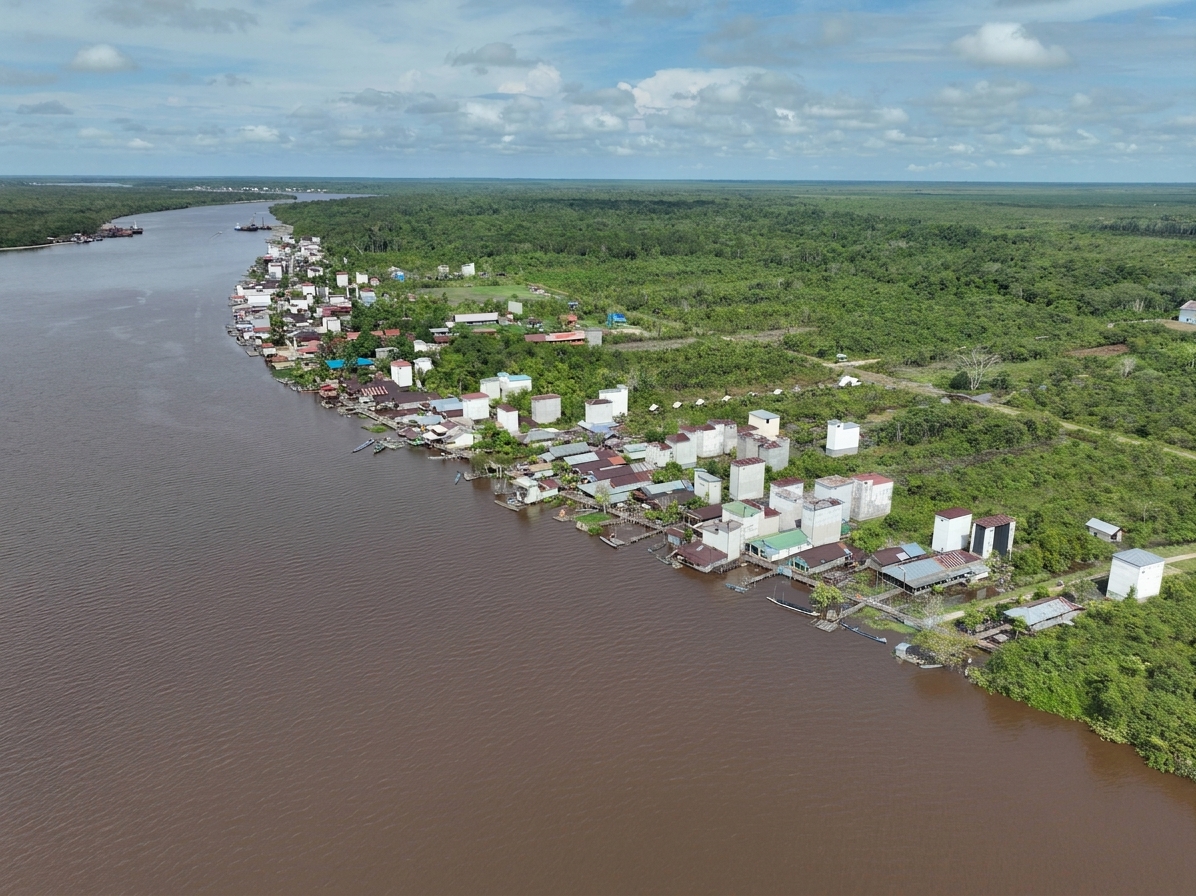
On 23 October 2008, PT Kayu Alam Kencana submitted a formal application to Indonesia's Ministry of Forestry for an IUPHHK-HTI permit covering 50,000 hectares in Kotawaringin Timur district. Today, those 50,000 hectares can be found within the project footprint. The application was processed by the Ministry and subsequently rejected on 26 November 2008 because its documentation was incomplete.
This distinction is important. The rejection was administrative rather than a determination that the land was unsuitable for plantation development. Under the applicable regulations, an incomplete application had to be rejected, and the Ministry's response to the company explicitly invited them to resubmit once the missing documents had been completed.
The government file also provides evidence of earlier engagement. Eight days before the application was submitted to the Ministry, the Head of the Kotawaringin Timur District Forestry Service had already issued a Technical Consideration Letter relating to the application. Taken together, these records provide primary evidence that land within the present-day project area was being actively prospected for industrial plantation development in 2008, one year after RMU submitted its restoration concession application.
From one plantation to a wider conversion scenario
The project’s baseline scenario highlights three plantation operators (identified as Agents A, B and C) that would have collectively converted the 149,800-hectare project area over the baseline period. And there is verifiable evidence to support this assertion.
First is the regulatory context. Indonesian policy limited the area that could be controlled through individual industrial timber plantation licences. A later regulation formalised a 50,000-hectare cap per IUPHHK-HTI licence per company outside Papua and West Papua. PT Kayu Alam Kencana's application for exactly 50,000 hectares reflects this recognised commercial scale.
Second is infrastructure. Pulp plantations in Central Kalimantan faced the challenge of operating without a local pulp mill. Research by CIFOR documented operators using rivers to transport pulpwood to Sumatra-based mills or export terminals. Under the project’s baseline scenario, once the first operator had established the necessary river-loading infrastructure and demonstrated the viability of the supply chain, barriers to subsequent operators entering neighbouring areas would have been reduced.
Third, there were precedents elsewhere. Multiple plantation operators were already active across comparable Indonesian peat landscapes, including Kampar and Merang, while more recent data record five HTI companies within the neighbouring Kahayan–Sebangau peat hydrological unit. A major industrial timber plantation concession was also granted in adjacent Kapuas district in 2009, demonstrating that this model of development was taking place in the surrounding landscape during the same period.
What about Indonesia's forest moratorium?
Indonesia's 2011 moratorium on new forest and peatland concessions is sometimes cited as evidence that plantation conversion would subsequently have been blocked. However, the moratorium contained important exemptions. Presidential Instruction No. 10/2011 explicitly excluded applications that had already received in-principle approval from the Minister of Forestry.
Research has also questioned the moratorium's effectiveness in preventing peatland deforestation. In 2022, a peer-reviewed study examining its effects between 2011 and 2018 found its material impact on peatland deforestation to be minimal at best, while subsequent analyses have documented repeated revisions to the areas covered by the moratorium.
Under the Katingan Mentaya Project’s counterfactual timeline, the first plantation operator, following a corrected application in early 2009, would have been in a position to obtain in-principle approval before the moratorium came into force in May 2011. The timing for subsequent operators is more contingent on how quickly applications would have been processed.
This distinction, too, is important: additionality does not require certainty about events that, by definition, never happened. Instead, it requires a counterfactual that is demonstrably plausible and grounded in the best available evidence. And this is exactly what the project baseline scenario sets out.
Why independent verification matters
No carbon project should simply declare additionality without being verified. Credibility depends on independent scrutiny of the evidence, assumptions and methodologies behind its claims. With this in mind, the Katingan Mentaya Project baseline was developed under Verra's Verified Carbon Standard methodology and validated by an accredited third-party Validation/Verification Body (VVB). The project's Verra record, VCS 1477, contains its Project Description, Baseline Paper and monitoring reports.
The project has also achieved the Triple Gold tier under Verra's Climate, Community and Biodiversity (CCB) Standards, which recognise exceptional performance across climate, community and biodiversity dimensions. In addition, independent carbon ratings agencies Sylvera and BeZero have both given the project an AA rating, with their assessments incorporating independent due diligence of the project's baseline and additionality.
In 2022, the Natural Climate Solutions Alliance (NCSA) went so far as to describe the initiative as a “lighthouse” project, one of six best-in-class forest carbon projects that “shine a light” on the potential of nature investment. Since then, the regulatory framework underpinning our baseline scenario has been examined through an independent Legal Opinion from Sembiring & Ferdianza Law Office, dated 23 April 2026 and included in the current Project Description.
Additionality is not a one-time test
Landscapes, regulations and deforestation pressures change over time. A credible baseline therefore cannot simply be established at the beginning of a project and left unquestioned indefinitely. Under Verra requirements, the project’s baseline is reassessed at renewal using current information on deforestation drivers, regulations and observed patterns within the landscape.
Our current renewal applies updated methodology alongside the latest available legal and landscape evidence. This continuing reassessment is an important component of carbon market integrity; it ensures that project claims continue to be tested against changing real-world conditions, rather than relying solely on assumptions established years earlier.
Building confidence through evidence
Additionality is foundational to forest conservation finance. It not only determines the value of a project’s credits, but also signals the overall credibility of the project itself. And this taps into a wider issue—the trust that is needed from buyers, implementation partners and community stakeholders if the project is to take root and deliver meaningful, measurable impacts over time.
Following the official reopening of Indonesia’s international carbon market in July 2026 and the project’s return to issuance with approximately 20 million carbon credits, the topic of additionality, and its value to credible, transparent nature conservation finance, returned to centre stage. At that time, Mandy Rambharos, CEO of Verra, framed the benefits of due diligence in their wider context, via a statement on the Verra website: “project developers and buyers alike can have greater confidence and trust in the market,” she explained, adding that “ultimately, this will help scale emission reductions while channelling climate finance to communities across Indonesia.”
Additionality is integral to this confidence. Essentially, it poses a simple but pertinent question: did this project make a difference? For the project, answering that question means going beyond assertion. Our baseline is supported by a documented plantation application covering land within today's project area, government records and regulations, the economic and infrastructure conditions affecting plantation development, comparable patterns of land conversion elsewhere in Indonesia and evidence of plantation expansion within the surrounding landscape.
Just as importantly, those claims are open to external scrutiny through third-party validation, independent ratings, legal review and publicly accessible project documentation. In a carbon market where buyers increasingly demand evidence of quality and integrity, this combination of primary documentation, transparent methodology and independent verification provides the basis for demonstrating that the project’s emissions reductions are real, measurable and, crucially, additional.
Buy carbon credits from Katingan
Climate change is a global challenge that requires global action. We can help you meet your commitments to deliver a brighter future.