

Fieldtrip journal: Kirsten Baillie Carlile visits the Katingan Mentaya Project
Working in the natural climate solutions space, we often talk about how it is more than just trees and carbon, but working on the market-side, dealing with carbon units, this idea can sometimes feel quite remote and abstract.Earlier this year, however, I was lucky enough to visit our flagship project in Indonesia and find out first-hand that the trees, while important, are just part of a much bigger story.
The entry point for any visit to the Katingan Mentaya Project is through Sampit. Sampit is a town in Central Kalimantan, in the Indonesia region of Borneo. It was once a major logging port, before timber made way for other industries. Today it’s a bustling, lively hub in the East Kotawaringin Regency.
The project sits just over the other side of the Mentaya river, and covers over 150,000ha of peat swamp forest, stretching north and south, penned in between the Mentaya and Katingan rivers.
The project area is divided into six zones, each overseen by a local zone leader who reports to the larger project management team. Within these zones, there are 39 villages that have signed Memorandums of Understanding (MOUs) between the village and the project. These partnerships involve protecting and safeguarding the village forest areas, conservation of village forest resources, and environmental services.

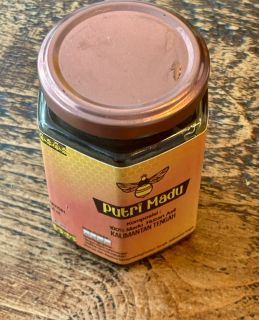
Next, we made a quick stop at the PT RMU offices to be briefed on our trip deeper into the project. From there, we went to the STA Marketplace in the centre of town, which is a local hub for selling products produced within the project area. I managed to pick up some wonderful, locally produced honey (A few days later I would see where it was produced!).
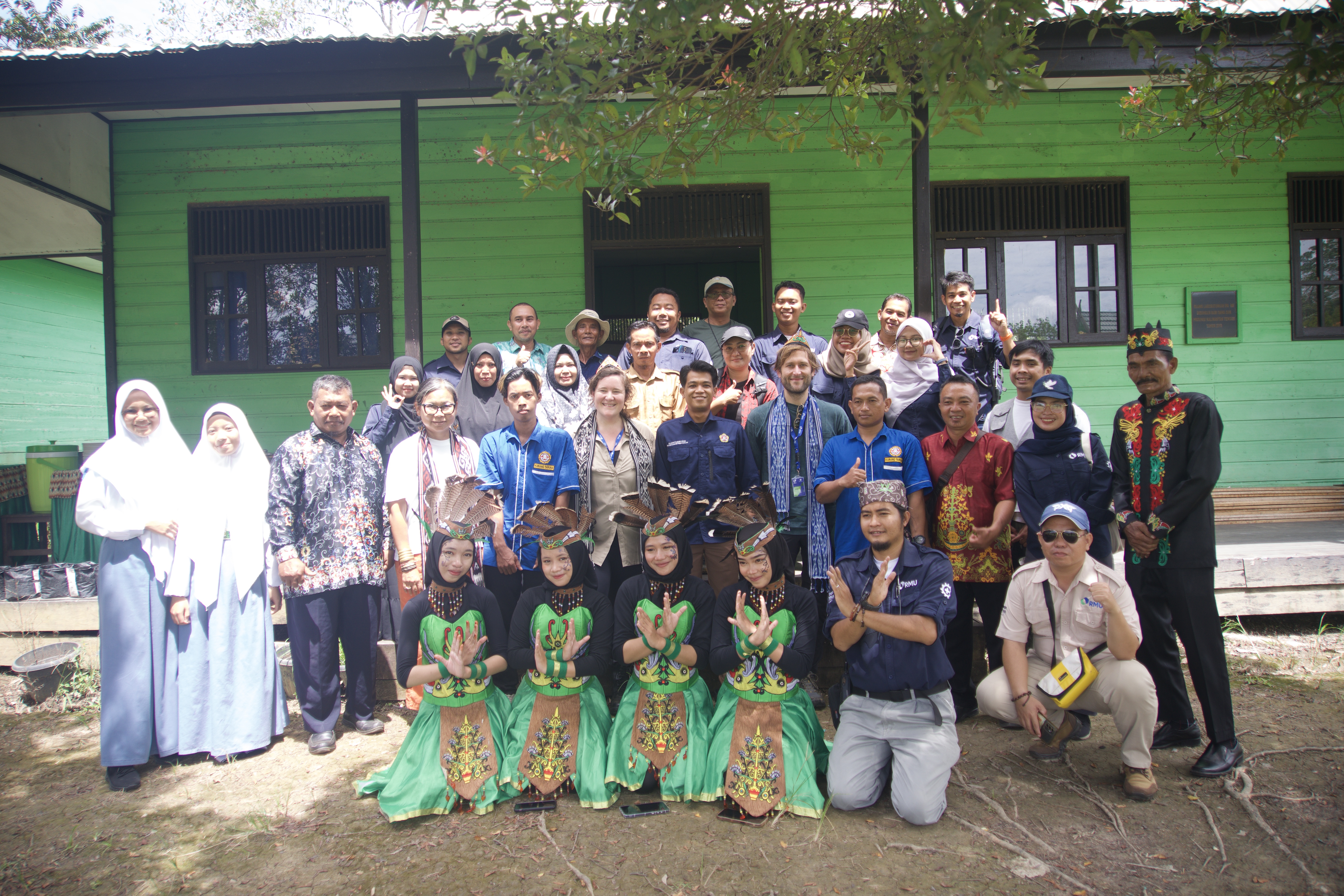
The following day, we travelled north on the Mentaya River to the village of Terangtang, which is in the Seranau Zone. The head of the zone welcomed us with a traditional warrior dance and a ceremonial blessing involving the cutting of bamboo. We were then presented with a customary scarf and headdress, followed by a moving dance performed by four local school girls.
Whilst there, we met some community members from Terangtang, including health care assistants, teachers and beneficiaries of the nonformal education program, youth groups driving the waste management programme and other small businesses, including a producer of Ratan goods. It was a fantastic session, held in the local schoolhouse, telling an incredible story about the success of the project and the positive affect on their daily lives. This concluded with a quick round of selfies! (I felt almost famous!).
Central Post
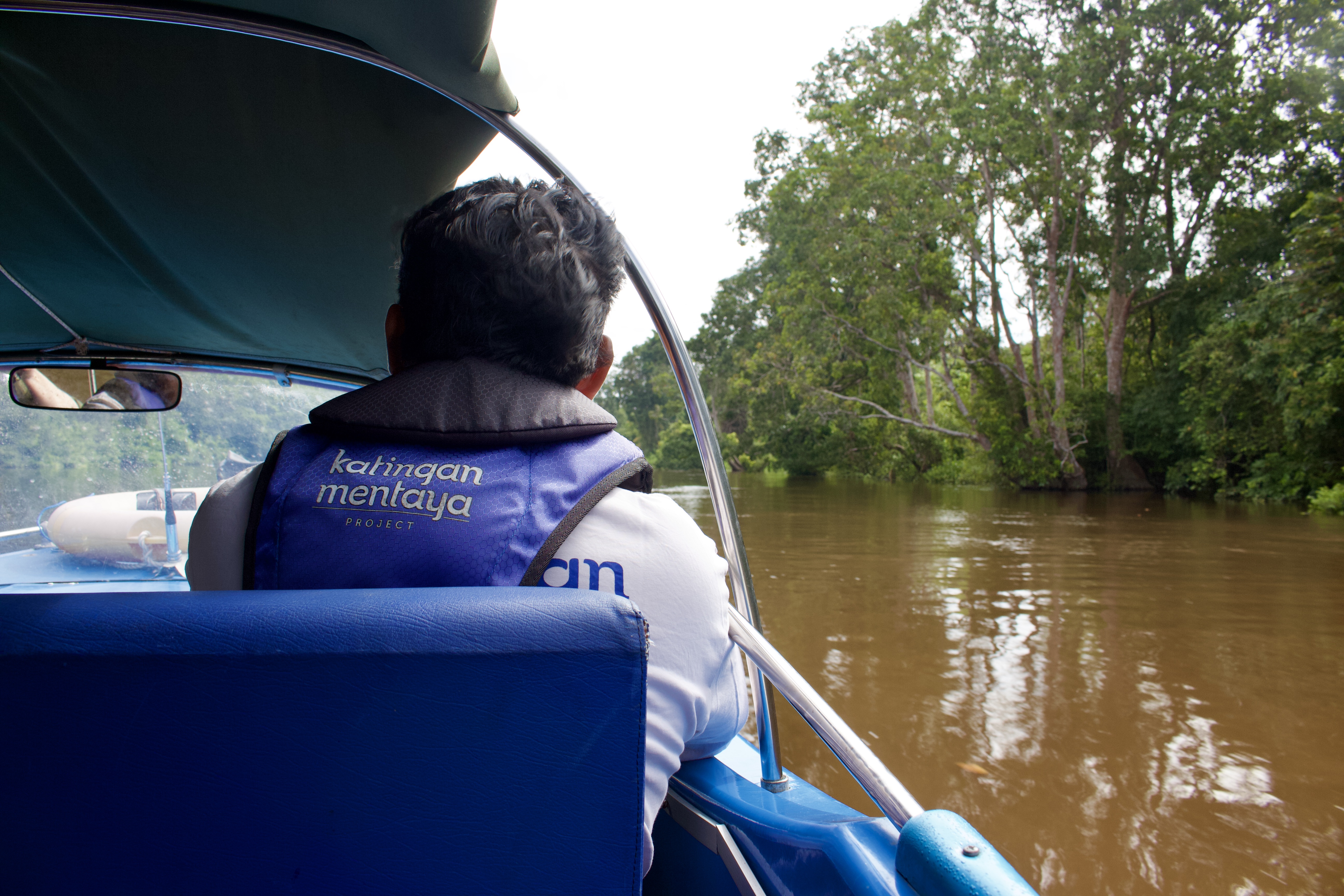
From Terangtang we took a boat south to the Central Post, which is located on the Central Canal, connecting the Mentaya River to the Katingan River. The boat ride took a few hours which helped to catch up with the looming jet lag.
We were dropped off at the Hantipan Nursery to learn about the replanting in different areas of the project. There is a boardwalk that winds through the nursery and on to the Central Post. Along the way we witnessed the demonstration plots that are managed by the local communities.
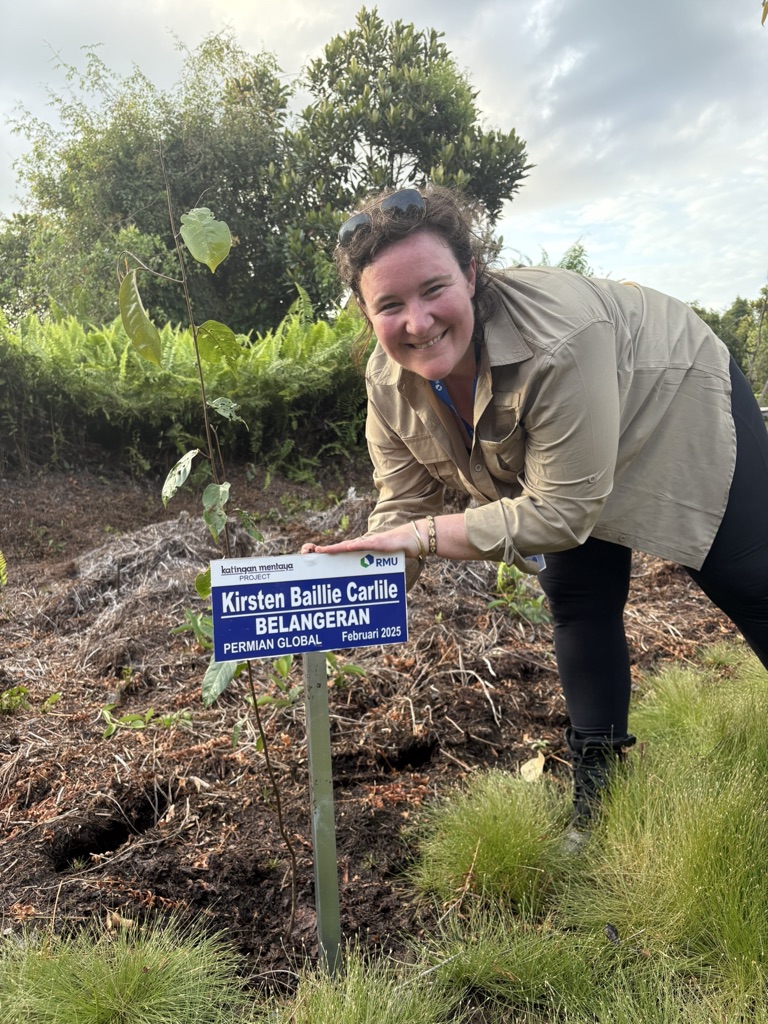
Central Post is surrounded by trees at various stages of growth, all planted by visitors to the site over the last twelve years. I was invited to plant a Belangeran tree (a relation to the Dipterocarpaceae family), and after almost falling into the peat, successfully added my tree to the grove. It fills me with joy to know that it is thriving, along with the project that means so much to us.
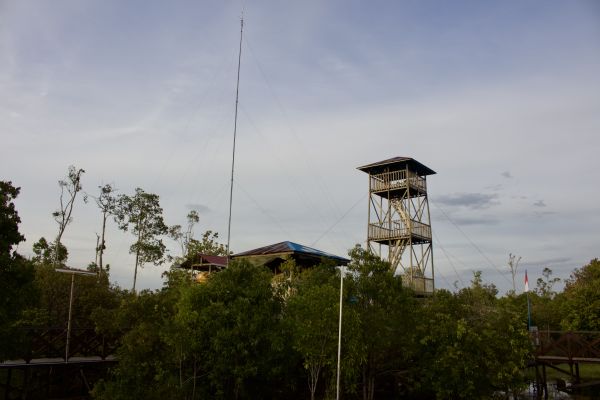
The Central Post is a jumping off point for the forest boardwalk trails and research transects, allowing visitors to safely explore the peatland ecosystem. It is a place to educate people about the role peatland plays in conservation and offers many wildlife spotting opportunities. We were lucky to see some birds, but I was hoping we would get a visit by “John” a resident Orangutan who has been visiting the camp over the past few months.
Back in deeper waters, we headed to the Mendawai Village where we were greeted by a group of women-led business owners, who created their businesses through microfinance loans funded by the project. These women were strong, proud and wanted to shout their successes from the rooftops. We had a fantastic meal with them and enjoyed listening to their optimism and hope for their future. Leaving, we took a detour via an extended healthcare clinic funded by the project.
One of the biggest threats to the Project are fires, which is why the team puts so much emphasis on fire mitigation and management. There have been no fires in the project area in the last 2 years. The 2015 El Niño fire season in Indonesia was one of the most severe the world has seen, and left some areas within the project burnt. The regeneration of these areas are very inspiring.
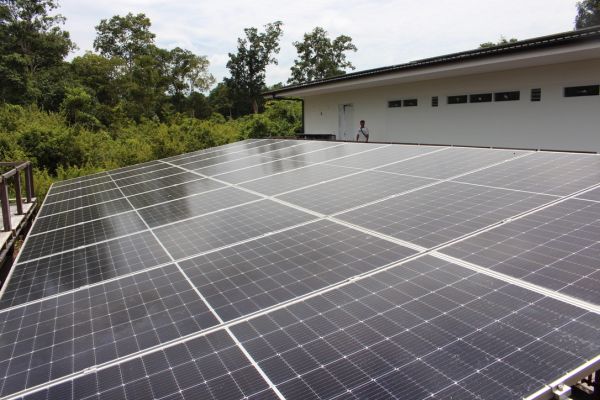
We were greeted by the head of the Kamipang Zone, who introduced us to the group who harvested the honey. Tempalas Village is important for other reasons beyond honey. We were shown the solar panel development established as a result of the Katingan Mentaya Project. This development has also built a hall to help the community during floods, homestay accommodations for visiting groups, eco-tourism facilities, and an albumin factory, which will create more jobs for the local community and drive further investment into the area.

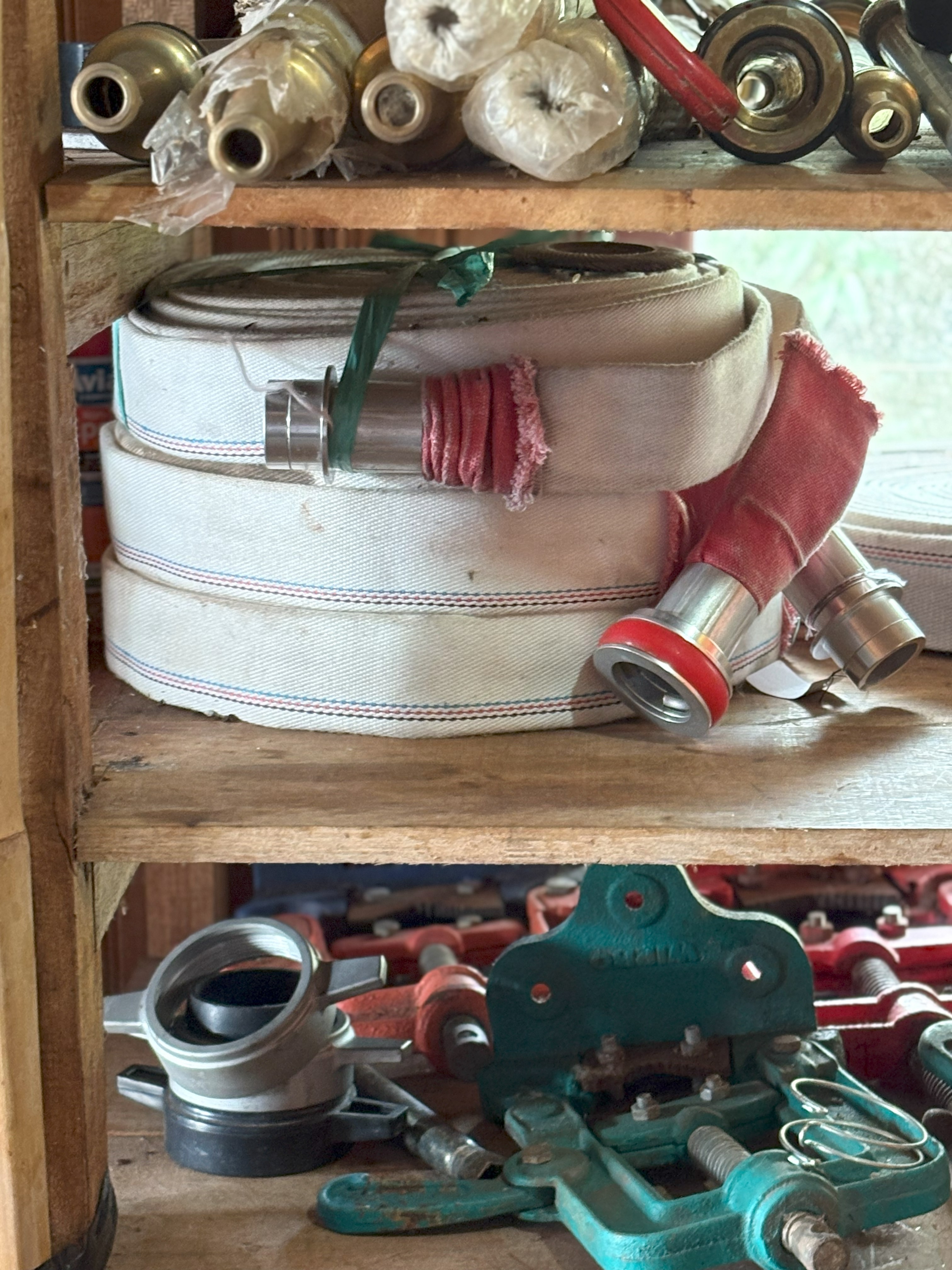
We then journeyed to our final destination, the community of Telaga. The head of the zone accompanied us to the local project field office, where the local team trains, plans and stores firefighting equipment. As with many experiences on this trip, I got to relive a childhood memory (having grown up in South Africa): a motorcycle ride to the local school and town hall. There, we were greeted by the head of the village, customary leaders, local farmer groups, firefighters, and health cadres. We met a group of women who were making health supplements to be taken to market and sold at the STA Marketplace in Sampit.
It felt like we had come full circle at this point by meeting the community groups who are:
Saying goodbye to the river, forest and communities on our drive towards Palangkaraya airport there was a quietness in our car. A stillness. A reflection on what the last four days had shown us and taught us. I have never been more out of my comfort zone, yet more at peace. The lessons and experiences from this trip have been profoundly moving and changed me as a person.
Looking ahead, I am excited about the future and the continued progress we will make in forest protection and climate change mitigation. There is still much work to be done, but with the dedication and passion of the Permian Global team, I am confident that we will continue to make a difference.
The project sits just over the other side of the Mentaya river, and covers over 150,000ha of peat swamp forest, stretching north and south, penned in between the Mentaya and Katingan rivers.
The project area is divided into six zones, each overseen by a local zone leader who reports to the larger project management team. Within these zones, there are 39 villages that have signed Memorandums of Understanding (MOUs) between the village and the project. These partnerships involve protecting and safeguarding the village forest areas, conservation of village forest resources, and environmental services.
Mentaya Sweet
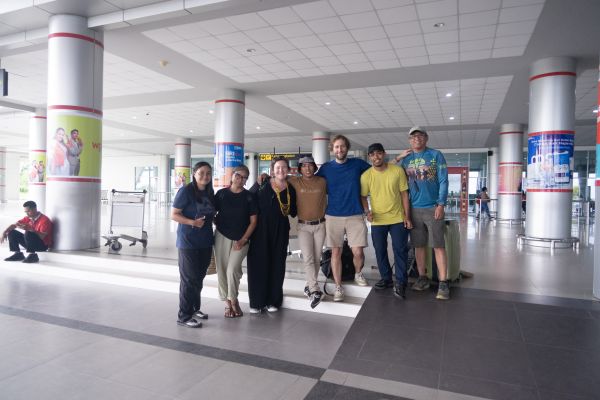
We were greeted at the airport by our local colleagues from Rimba Makmur Utama (PT RMU), Permian Global’s project partner, to start our packed four-day itinerary.
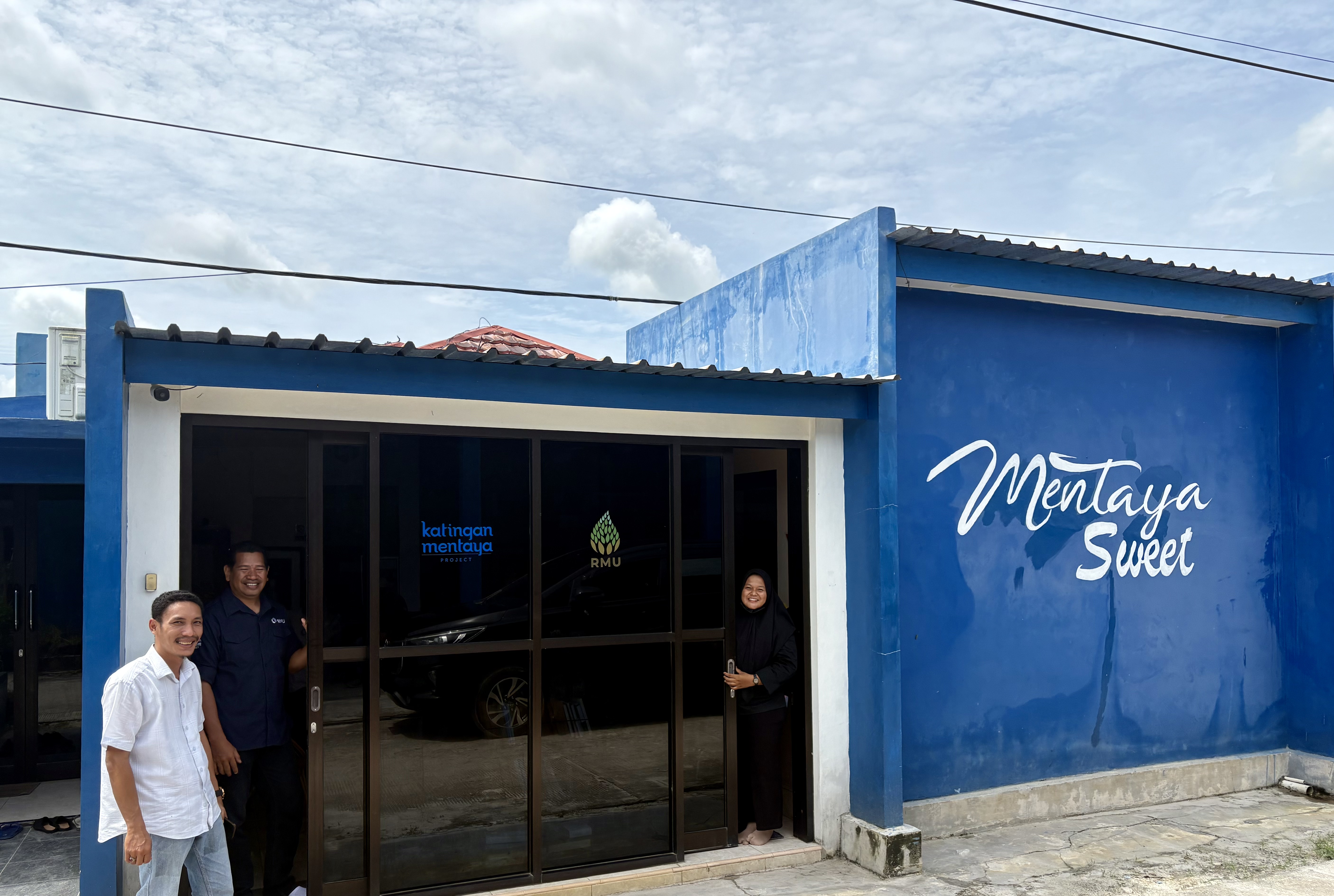
Our trip started in Sampit, visiting the Mentaya Sweet HQ and STA Marketplace. We toured the Mentaya Sweet factory and production kitchen to see how coconut sugar and coconut sugar ketchup are made and how other products, such as cashew nuts, are packaged.
Our trip started in Sampit, visiting the Mentaya Sweet HQ and STA Marketplace. We toured the Mentaya Sweet factory and production kitchen to see how coconut sugar and coconut sugar ketchup are made and how other products, such as cashew nuts, are packaged.
The Project helped the initiative start as a way to produce coconut sugar to be sold as an alternative means of employment. The growth of the business has been really impressive, allowing it to produce many more products and divert the profits back into the local community.
Next, we made a quick stop at the PT RMU offices to be briefed on our trip deeper into the project. From there, we went to the STA Marketplace in the centre of town, which is a local hub for selling products produced within the project area. I managed to pick up some wonderful, locally produced honey (A few days later I would see where it was produced!).
Up the river
The following day, we travelled north on the Mentaya River to the village of Terangtang, which is in the Seranau Zone. The head of the zone welcomed us with a traditional warrior dance and a ceremonial blessing involving the cutting of bamboo. We were then presented with a customary scarf and headdress, followed by a moving dance performed by four local school girls.
Whilst there, we met some community members from Terangtang, including health care assistants, teachers and beneficiaries of the nonformal education program, youth groups driving the waste management programme and other small businesses, including a producer of Ratan goods. It was a fantastic session, held in the local schoolhouse, telling an incredible story about the success of the project and the positive affect on their daily lives. This concluded with a quick round of selfies! (I felt almost famous!).
Central Post
From Terangtang we took a boat south to the Central Post, which is located on the Central Canal, connecting the Mentaya River to the Katingan River. The boat ride took a few hours which helped to catch up with the looming jet lag.
We were dropped off at the Hantipan Nursery to learn about the replanting in different areas of the project. There is a boardwalk that winds through the nursery and on to the Central Post. Along the way we witnessed the demonstration plots that are managed by the local communities.
Central Post is surrounded by trees at various stages of growth, all planted by visitors to the site over the last twelve years. I was invited to plant a Belangeran tree (a relation to the Dipterocarpaceae family), and after almost falling into the peat, successfully added my tree to the grove. It fills me with joy to know that it is thriving, along with the project that means so much to us.
The Central Post is a jumping off point for the forest boardwalk trails and research transects, allowing visitors to safely explore the peatland ecosystem. It is a place to educate people about the role peatland plays in conservation and offers many wildlife spotting opportunities. We were lucky to see some birds, but I was hoping we would get a visit by “John” a resident Orangutan who has been visiting the camp over the past few months.
We were given a very comprehensive overview of the fire mitigation and management activities in the project and heard about how successful it has been. They also showed us how the team collect peat measurements in order to check in on the health of the ecosystem. Peat is a remarkable substance, not least because of the vital role it plays in our work to tackle the climate crisis. The Katingan peat dome covers a vast area, but it is also deep, as much as 13 meters in places and it has taken tens of thousands of years to form. You quickly appreciate just how fleeting our time is in relation to the geological age of this ecosystem, and how important it is to be custodians of it.

Day three started with an amazing breakfast spread. After a quick group picture, we were off to the Katingan River and to the Mendawai Zone. We first stopped at the PT RMU office in Kampung Melayu where we met the head of the Mendawai Zone, and had a quick chat about what the community was doing in this zone, as well as a tour of the firefighting equipment.
We took a detour to visit the Mendawai Social Forestry team (LPDH Mendawai). They are an award-winning group who have settled just off the Katingan River, up a very narrow and shallow canal. LPHD Mendawai was formed in 2022, after an MOU was signed between the community and the project. This support gave them the opportunity to safeguard their forest from threats, including illegal logging and fires.
Katingan River
Day three started with an amazing breakfast spread. After a quick group picture, we were off to the Katingan River and to the Mendawai Zone. We first stopped at the PT RMU office in Kampung Melayu where we met the head of the Mendawai Zone, and had a quick chat about what the community was doing in this zone, as well as a tour of the firefighting equipment.
We took a detour to visit the Mendawai Social Forestry team (LPDH Mendawai). They are an award-winning group who have settled just off the Katingan River, up a very narrow and shallow canal. LPHD Mendawai was formed in 2022, after an MOU was signed between the community and the project. This support gave them the opportunity to safeguard their forest from threats, including illegal logging and fires.
They explained how the support from the project has enabled them to revegetate their forest area, build a patrol post and buy a small boat. They were recognised and nominated in 2023 for the firefighting team category acknowledging their success in fire prevention. Meeting this team was great, although we didn’t have a lot of time, as dropping water levels forced us to make a quick exit!
Back in deeper waters, we headed to the Mendawai Village where we were greeted by a group of women-led business owners, who created their businesses through microfinance loans funded by the project. These women were strong, proud and wanted to shout their successes from the rooftops. We had a fantastic meal with them and enjoyed listening to their optimism and hope for their future. Leaving, we took a detour via an extended healthcare clinic funded by the project.
Another hour-long boat trip took us to Bakumin Post, our rest stop for the evening. This post serves as a storage point for firefighting equipment and acts as a base during the dry season to monitor the area for fires. The team there also monitors for other illegal activities, such as logging and poaching. Located on the eastern side of the project area, it is a prime spot for wildlife viewing due to the openness of the vegetation.
One of the biggest threats to the Project are fires, which is why the team puts so much emphasis on fire mitigation and management. There have been no fires in the project area in the last 2 years. The 2015 El Niño fire season in Indonesia was one of the most severe the world has seen, and left some areas within the project burnt. The regeneration of these areas are very inspiring.
One of our team members shared that he had previously visited the areas that would later be burnt during the 2015 fire season. He described the forest as being so thick it was hard to see through. It was difficult to imagine, as the forest I was seeing was in its infant stage, but heartening to know that in time it will return to its former state.
The post was a magical place, a thriving ecosystem, surrounded by birdsong, mosquitoes, and water. We took this moment to take a break, snack on some locally grown foods, and watch the sun set in this beautiful setting.
In the morning, we got back in our boats for our last day on the Katingan River. We took another detour down a canal to see some of the beehives where the honey we bought from the STA Marketplace is harvested.
The post was a magical place, a thriving ecosystem, surrounded by birdsong, mosquitoes, and water. We took this moment to take a break, snack on some locally grown foods, and watch the sun set in this beautiful setting.
In the morning, we got back in our boats for our last day on the Katingan River. We took another detour down a canal to see some of the beehives where the honey we bought from the STA Marketplace is harvested.
Harvesting this honey is quite a risky process, and the team in Tempalas does a great job handling this challenging task . You can watch a video about them on the PT RMU YouTube channel.[ https://youtu.be/i6qSs60wFXI?si=sDmo1c-j9K4_koRk]
We were greeted by the head of the Kamipang Zone, who introduced us to the group who harvested the honey. Tempalas Village is important for other reasons beyond honey. We were shown the solar panel development established as a result of the Katingan Mentaya Project. This development has also built a hall to help the community during floods, homestay accommodations for visiting groups, eco-tourism facilities, and an albumin factory, which will create more jobs for the local community and drive further investment into the area.
We then journeyed to our final destination, the community of Telaga. The head of the zone accompanied us to the local project field office, where the local team trains, plans and stores firefighting equipment. As with many experiences on this trip, I got to relive a childhood memory (having grown up in South Africa): a motorcycle ride to the local school and town hall. There, we were greeted by the head of the village, customary leaders, local farmer groups, firefighters, and health cadres. We met a group of women who were making health supplements to be taken to market and sold at the STA Marketplace in Sampit.
It felt like we had come full circle at this point by meeting the community groups who are:
Fully invested in protecting the forest and seeing the benefits of keeping the forest intact, and working on different enterprises that are creating an income stream to their households and have access to the market through the Katingan Mentaya Project.
Saying goodbye to the river, forest and communities on our drive towards Palangkaraya airport there was a quietness in our car. A stillness. A reflection on what the last four days had shown us and taught us. I have never been more out of my comfort zone, yet more at peace. The lessons and experiences from this trip have been profoundly moving and changed me as a person.
I sit in an office halfway across the world in London and the last ten years I have been working with the Katingan Mentaya Project from a distance, so it was incredible seeing the fruits of our labour firsthand. Seeing how my work directly impacts what happens on the ground, between our vast technical team, our local project partners and the communities who are advocating for projects like these, I realise we are all making our mark.
Looking ahead, I am excited about the future and the continued progress we will make in forest protection and climate change mitigation. There is still much work to be done, but with the dedication and passion of the Permian Global team, I am confident that we will continue to make a difference.
For more news click HERE
To visit PT RMU click HERE (English but Bahasa is available on the site)
Buy carbon credits from Katingan
Climate change is a global challenge that requires global action. We can help you meet your commitments to deliver a brighter future.